


 Elmer Glick
1 min read
Ice and Water Shield: Where It Goes and Why It Matters
Ice and water shield is a self-sealing, waterproof membrane that goes on the roof decking under the shingles in the places most likely to leak. It...
An ice dam is a ridge of ice that forms along the bottom edge of a roof. Snow higher up melts, runs down to the cold edge and freezes there. More meltwater then backs up behind the ice, works under the shingles and can leak into the walls and ceilings. In Williamsport, ice dams usually come from heat escaping into the attic, and the lasting fix is in the attic and under the shingles, not on top of the ice.
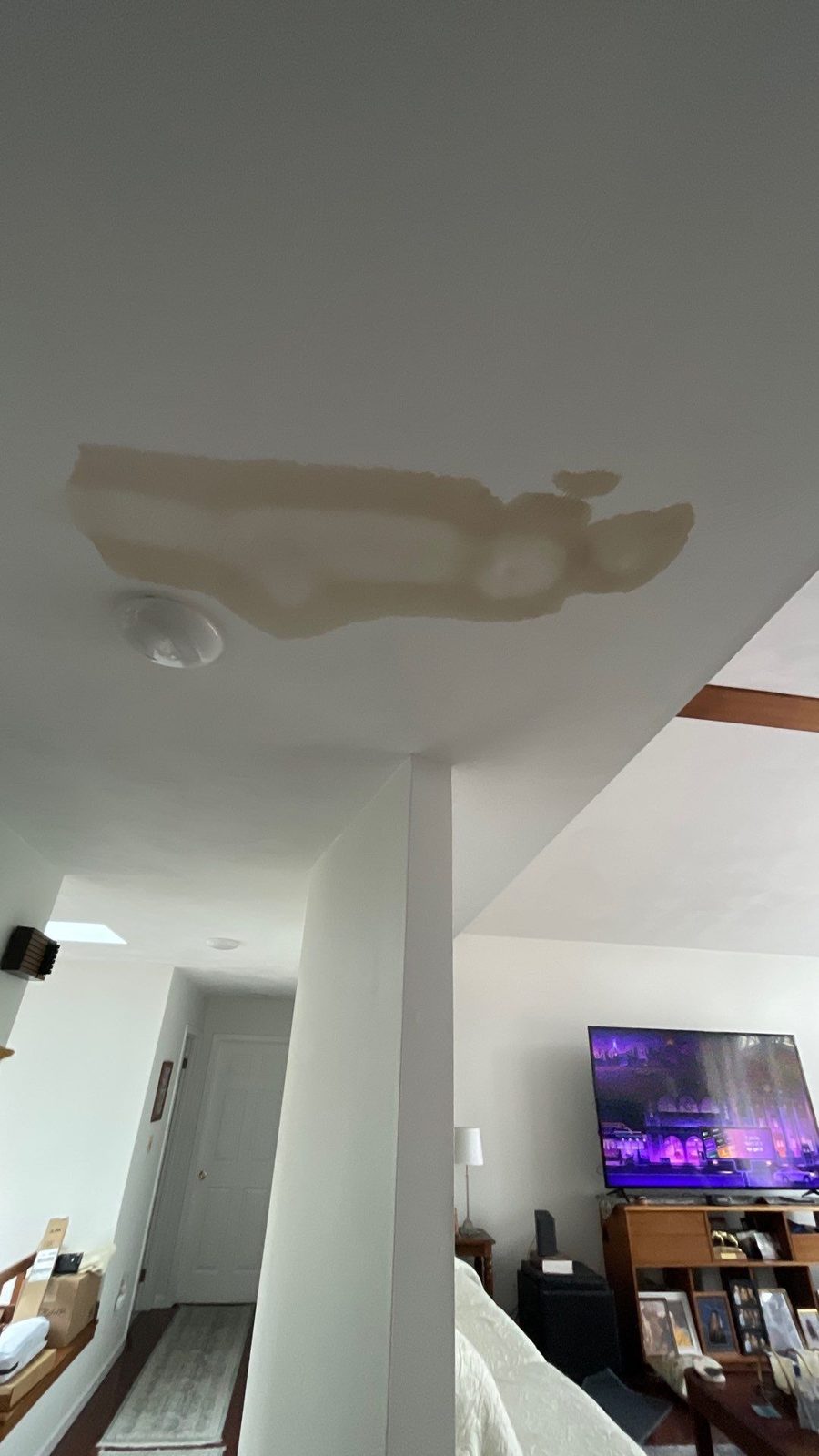
A ceiling stain from a roof leak. Stains along outside walls are a common sign of an ice dam leak.
Williamsport averages about 36 inches of snow a year, according to the National Weather Service's 1991 to 2020 normals, and January days often go above freezing while nights drop to around 20°F. That freeze and thaw is what builds ice at the roof edge: snow melts on the warm part of the roof during the day and refreezes at the cold eaves at night.
The housing stock matters too. About half of the homes in Williamsport were built before 1940, according to Census housing data. Many of these older homes have attics with little insulation, gaps around chimneys, light fixtures and attic hatches, and few or no vents at the eaves. Warm air from the living space leaks into the attic, heats the underside of the roof, and starts the melting.
Homes with knee walls, finished attics and low-slope sections over porches and additions are especially prone to ice dams, because they are hard to insulate and ventilate well.
For more on handling a leak, see what to do when your roof is leaking.
The long-term goal is a cold roof: the roof surface stays close to the outdoor temperature, so snow doesn't melt from below. That takes three things working together.
Most of the heat that melts roof snow is warm air leaking into the attic through gaps around chimneys, plumbing pipes, light fixtures, bath fans and the attic hatch. Sealing those gaps, then adding insulation, keeps the heat in the house where it belongs. This work is separate from the roof itself, and it also lowers heating bills.
Some heat always reaches the attic, and ventilation carries it out. A balanced system pulls cold air in at the eaves (intake) and lets warm air out at the top of the roof through ridge vents (exhaust). Poor ventilation is one of the most common problems we find in older attics, and the usual fix is adding intake. Our post on roof ventilation mistakes covers the details.
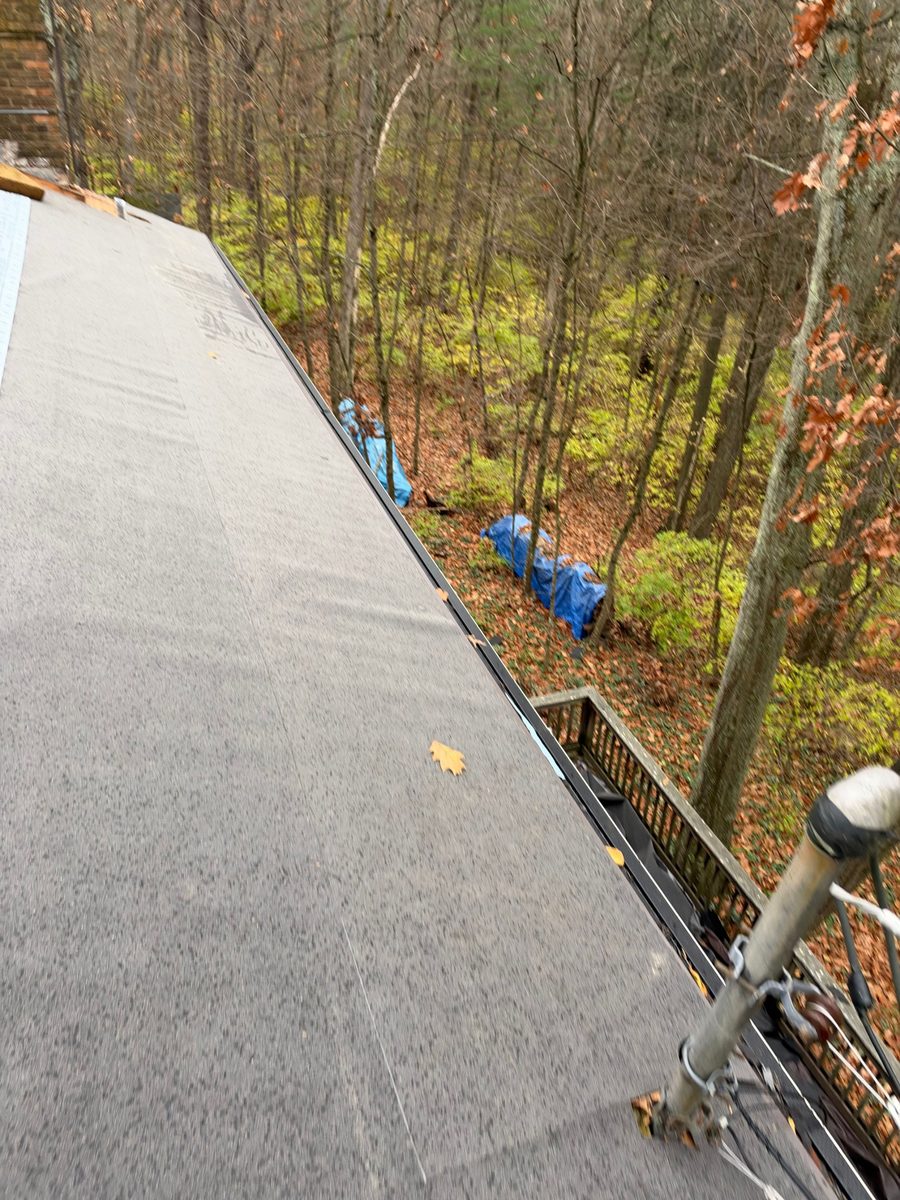
Ice and water shield along the roof edge, installed during a Starway roof replacement.
Ice and water shield is a self-sealing membrane that goes on the roof decking under the shingles. It seals around the nails, so water that backs up behind an ice dam can't get through. Building code requires it from the roof edge to at least 24 inches inside the outside wall. On our roof replacements, we install it on the first 6 feet up from the roof edge, around all roof penetrations and along all sidewalls. Read more about ice and water shield.
Heat cables, laid in a zigzag along the roof edge and in the gutters, can keep a channel open so meltwater drains. They don't fix the cause, though. The attic is still losing heat, the cables use electricity all winter, and ice can still form above them. They can help on a trouble spot that can't be fixed any other way, but sealing, insulating and ventilating the attic is the better fix.
A new roof alone won't stop ice from forming if the attic is still warm. What a new roof can do is stop the leaks: with ice and water shield along the edge and better ventilation, water that backs up behind the ice stays out of the house. If your roof is near the end of its life and you've had ice dam leaks, a replacement is the right time to fix the ventilation too. If you have an older home, see our guide to replacing the roof on an older Williamsport home.
We don't steam ice off roofs. What we do is repair the damage ice dams cause and fix the reasons they happen:
We work in Williamsport, South Williamsport, Montoursville and Jersey Shore. See our Williamsport roofing page for local projects, and our winter roof care checklist to get the rest of the house ready.
If you had ice dams or ceiling stains last winter, have the roof and attic checked before the next big snow. Schedule a free roof inspection, contact us, or call (814) 308-0490.
Heat leaking from the house into the attic warms the roof, so snow melts and runs down to the cold roof edge, where it freezes. Water then backs up behind the ice and can get under the shingles.
Yes. Williamsport averages about 36 inches of snow a year, winters go back and forth across freezing, and about half of the city's homes were built before 1940, often with little attic insulation or ventilation.
Don't climb on the roof or chip the ice. From the ground, you can rake snow off the bottom few feet of the roof and lay a stocking of calcium chloride ice melt across the dam to open a drain path.
Seal the air leaks into the attic, add insulation, and make sure the attic has enough intake and exhaust ventilation. Ice and water shield at the roof edge keeps backed-up water out of the house.
No. Ice dams start with a warm roof. Clogged gutters can make them worse because water that can't drain freezes at the edge, so keep the gutters clean before winter.
A new roof with ice and water shield along the edge stops most ice dam leaks, but ice can still form if the attic is warm. Fixing the ventilation and insulation is what stops the ice.
Yes. Starway repairs ice dam damage in Williamsport, South Williamsport, Montoursville and Jersey Shore and fixes the ventilation behind it. Call (814) 308-0490.
Call Starway Roof Systems: (814) 308-0490
1 min read
Ice and water shield is a self-sealing, waterproof membrane that goes on the roof decking under the shingles in the places most likely to leak. It...
1 min read
Central PA winters bring snow, ice dams and freeze-thaw cycles that find every weak spot in a roof. Before winter: clean the gutters, trim branches...
1 min read
The clearest signs your roof needs repair are stains on your ceilings, a lot of shingle granules in your gutters, fiberglass showing through the...